Hospitals Overflow, Experts Unemployed: Why Are 30,000+ Health Experts Jobless In 2025 While Chronic Disease Soars in Ghana?
In the first six months of 2025 alone, Accra’s Korle-Bu Teaching Hospital recorded a staggering 5,000 diabetes referrals, over 2,000 cases of complicated kidney diseases, and approximately 2,800 heart disease cases.
This isn’t an isolated issue; it’s a reflection of a nationwide crisis.
Chronic diseases now account for 43% of all deaths in Ghana , with about one in five of these deaths considered premature.
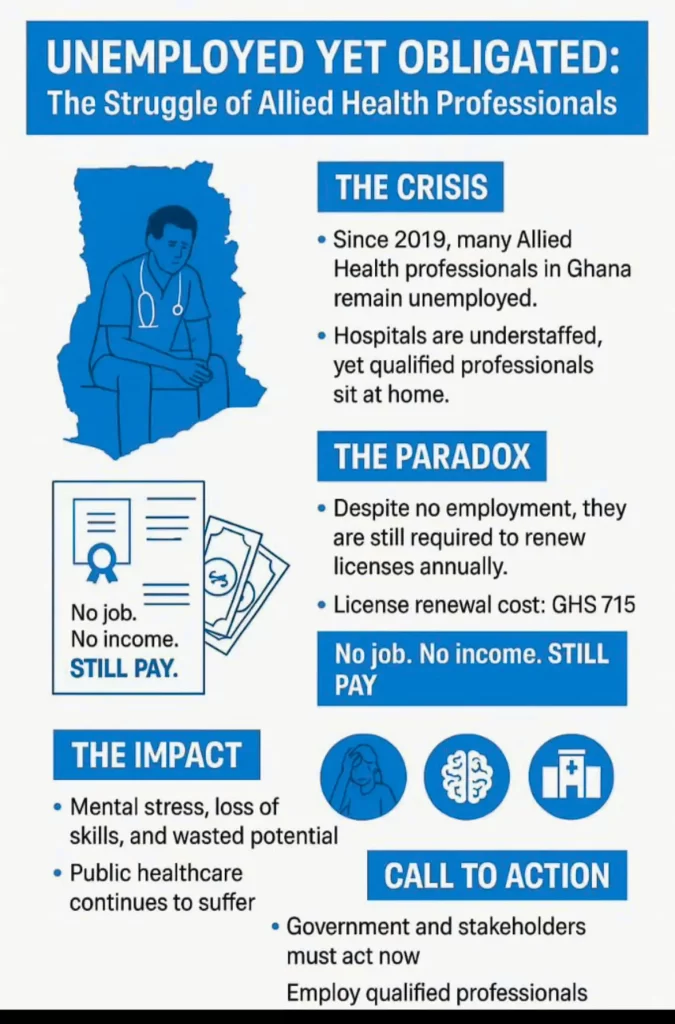
Table of Contents
A Preventable Problem
The Reality of 30000+ Health Experts Jobless In 2025
One of the most consistent factors driving this alarming trend is our dietary habits. This is a risk factor that cuts across every demographic—gender, ethnicity, age, and social background.
The problem isn’t just about what people eat, but what they don’t know. Studies show that low food and nutrition literacy are major drivers of chronic diseases, and research in Ghana reveals a widespread lack of knowledge and application of basic nutrition principles.
Wasted Army of Experts
Despite this growing health epidemic, Ghana is failing to leverage the skills of the very professionals trained to combat it.
Currently, more than 3,000 trained allied health professionals, including dietitians and nutritionists from about five graduating years, remain unemployed and unposted by the government.
Testimonies from the graduates themselves claim this number is as high as 30,000, highlighting a massive pool of untapped talent. While our hospitals are understaffed and patients wait for care, these skilled graduates are sitting idle, and their valuable training is going to waste.
The-struggle-of-Allied-Health-Professional
The frustration and despair among these graduates are palpable. In their own words:
“We have certain professions that don’t even have personnel, like health promotion, disease control officer, health information officer, and field technician… but we have trained and qualified personnel who can help; however, the government has left us to fend for ourselves.
We’ve been at home for too long, from 2019 till now, it hasn’t been easy. We have written letters upon letters, we have gone to the Ministry of Health, Ministry of Finance… but up till now, we haven’t heard anything from them.
But our own brothers and sisters in the Ministry of Health always get clearance.
What sin have we committed?.”
An account given by Ankomah General Secretary for Coalition of Unemployed Allied Health Professionals Association
What Ghana is Missing
These professionals are not just “reactive staff”; their most critical role is in preventive healthcare. They are trained to assess the nutrition-related conditions of diverse populations and design tailored interventions. They screen for health conditions, identify high-risk individuals, and provide education to stop diseases before they start.
Furthermore, they advocate for food justice policies to ensure all Ghanaians have access to equitable and healthy food. Developed countries like the US, UK, and Canada have already recognized this, making nutrition experts a central part of their healthcare teams. By employing these professionals, Ghana can slow the rate of chronic diseases before they become a crushing burden on families, hospitals, and the nation.

The Path Forward
Ghana cannot continue to neglect its trained allied health professionals. It is time for the government to act decisively.